SolarEnergies.ca has published a new 2026 guide for Abbotsford homeowners, farm operators, and small businesses weighing solar panel installation under changing BC Hydro rebate and self-generation rules. The guide, titled "Solar Panels Abbotsford 2026: Cost, Rebates, Fraser Valley Roofs And Farm Loads," focuses on the local mix that makes Abbotsford different from a standard urban solar market: suburban roofs, rural acreages, barns, shops, EV charging, heat pumps, and business-rate loads often exist side by side.
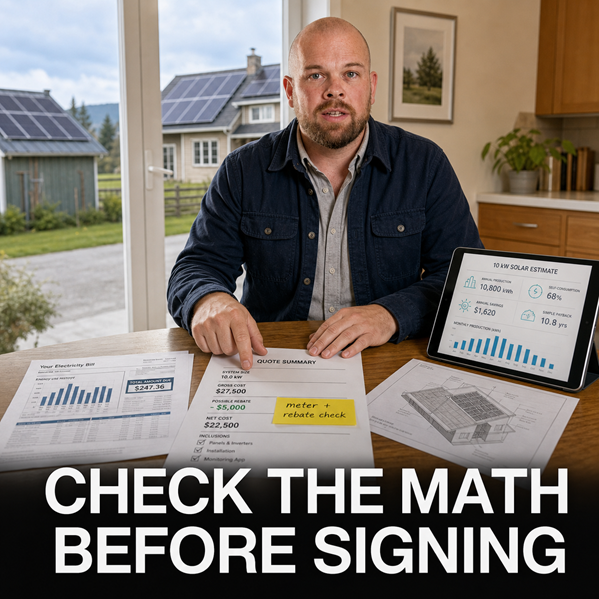
The new resource comes at a practical moment for B.C. solar buyers. BC Hydro says solar PV projects in the province typically cost about $2,000 to $3,000 per kW DC installed, with a 10 kW residential system often falling around $20,000 to $30,000 before rebates. BC Hydro also lists residential solar rebates worth up to $5,000 for eligible systems, while business accounts use a separate program with solar rebates up to $10,000 and battery storage rebates up to $10,000 for qualifying projects. SolarEnergies.ca says those distinctions matter in Abbotsford because a barn roof, shop roof, farm meter, or mixed-use account can change the rebate conversation.
"Abbotsford is a good example of why solar advice cannot stop at roof size," Vitaliy Lano, owner of SolarEnergies.ca, stated. "A large sunny roof can still be a poor quote if the proposal ignores the meter, the load, the rebate category, trenching, or the way BC Hydro treats exported power. The goal of the guide is to help people ask better questions before money is on the table."
The Abbotsford guide explains that solar can make sense for higher-use homes with EV charging, heat pumps, electric hot water, shops, barns, or farm loads, but warns that the strongest designs are tied to real electricity use rather than the maximum number of panels that can fit on a roof. For rural and agricultural properties, the guide points readers toward structural review, service capacity, meter configuration, wire runs, and permit responsibility as early quote questions, not afterthoughts.
The post also addresses new timing pressure in the B.C. solar market. Since June 1, 2026, BC Hydro says installations must be completed by a Home Performance Contractor Network member for solar and battery rebate eligibility. Starting July 1, 2026, new BC Hydro self-generation customers export excess generation at 10 cents per kWh under Rate Schedule 2289, with transition rules for existing net metering and rebate customers. SolarEnergies.ca says this makes self-consumption, system sizing, and quote assumptions more important for buyers comparing proposals.
"The export rate does not mean solar is suddenly bad," Lano commented. "It means the math has to be honest. Power used on site and power exported to the grid are not the same financial story. For Abbotsford homes and rural properties, that difference can shape the right system size."
The guide includes cost planning tables for 5 kW, 8 kW, 10 kW, and 12 kW-plus systems, plus a production section based on BC Hydro's guidance that a typical 10 kW residential system in B.C. can generate about 10,000 to 12,000 kWh per year. It cautions that production and bill value are not the same thing. Actual savings depend on roof orientation, shading, seasonal production, rate structure, taxes, basic charges, direct on-site use, and how much electricity is exported.
SolarEnergies.ca also highlights an often-missed local issue: permits. The City of Abbotsford says building permits help make sure construction meets structural, safety, land-use, and code requirements. The new guide advises readers to ask who handles the City of Abbotsford building permit, electrical permit, inspections, utility paperwork, and final documents before choosing an installer.
"A clean solar quote should make the boring details visible," Lano added. "If the proposal is vague about permits, service upgrades, roof structure, meter type, or battery backup circuits, that is not a small gap. Those are the details that protect the buyer."
The new Abbotsford solar guide also includes a SolarEnergies.ca calculator callout, installer comparison advice, and a reminder that available financing options may include 0% financing with $0 down payment depending on approval and program terms. SolarEnergies.ca can connect homeowners with certified installers who have completed more than 14,000 successful installs across Canada, giving readers a way to compare equipment, system size, warranties, financing, installation approach, and final numbers side by side.
###
For more information about Solar Energies In Canada SEIC, contact the company here:
Solar Energies In Canada SEIC
Vitaliy Lano
2368680609
admin@solarenergies.ca